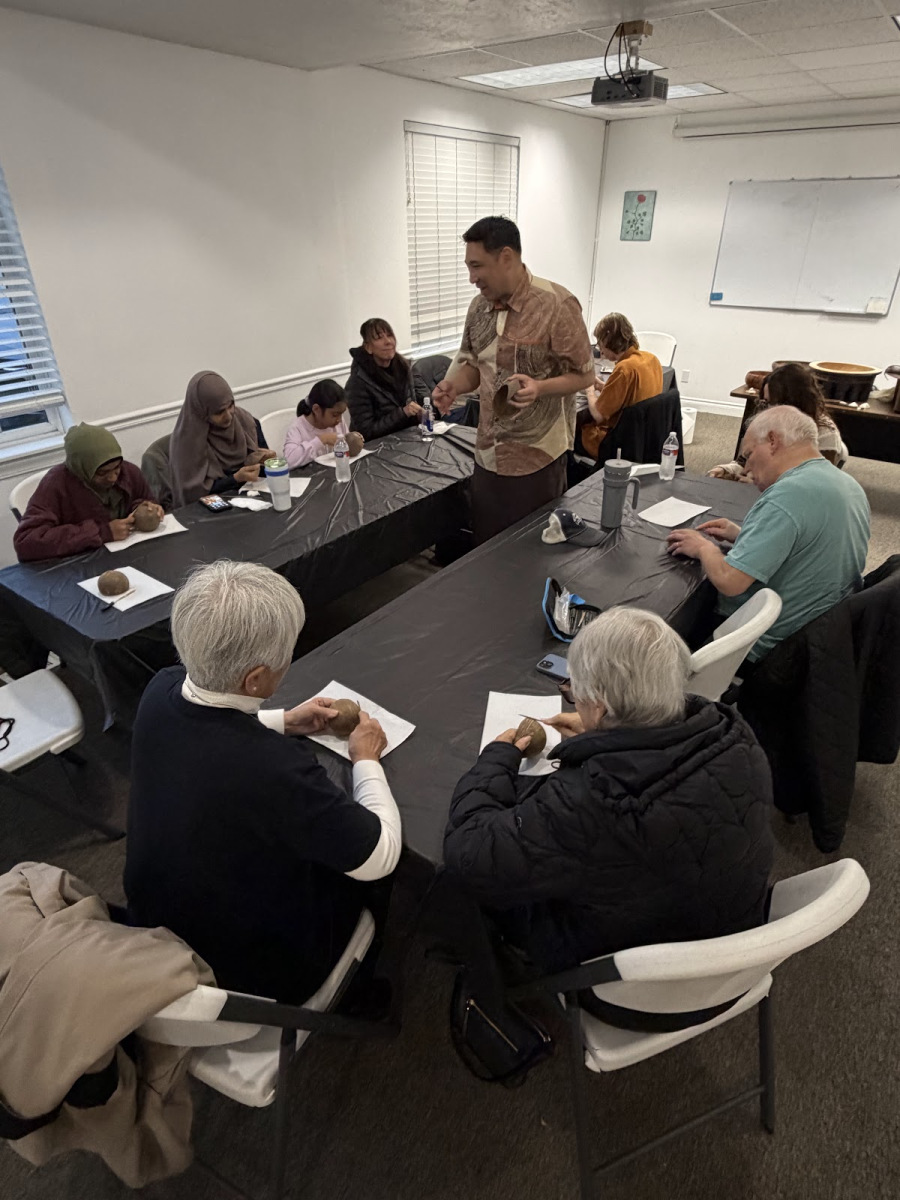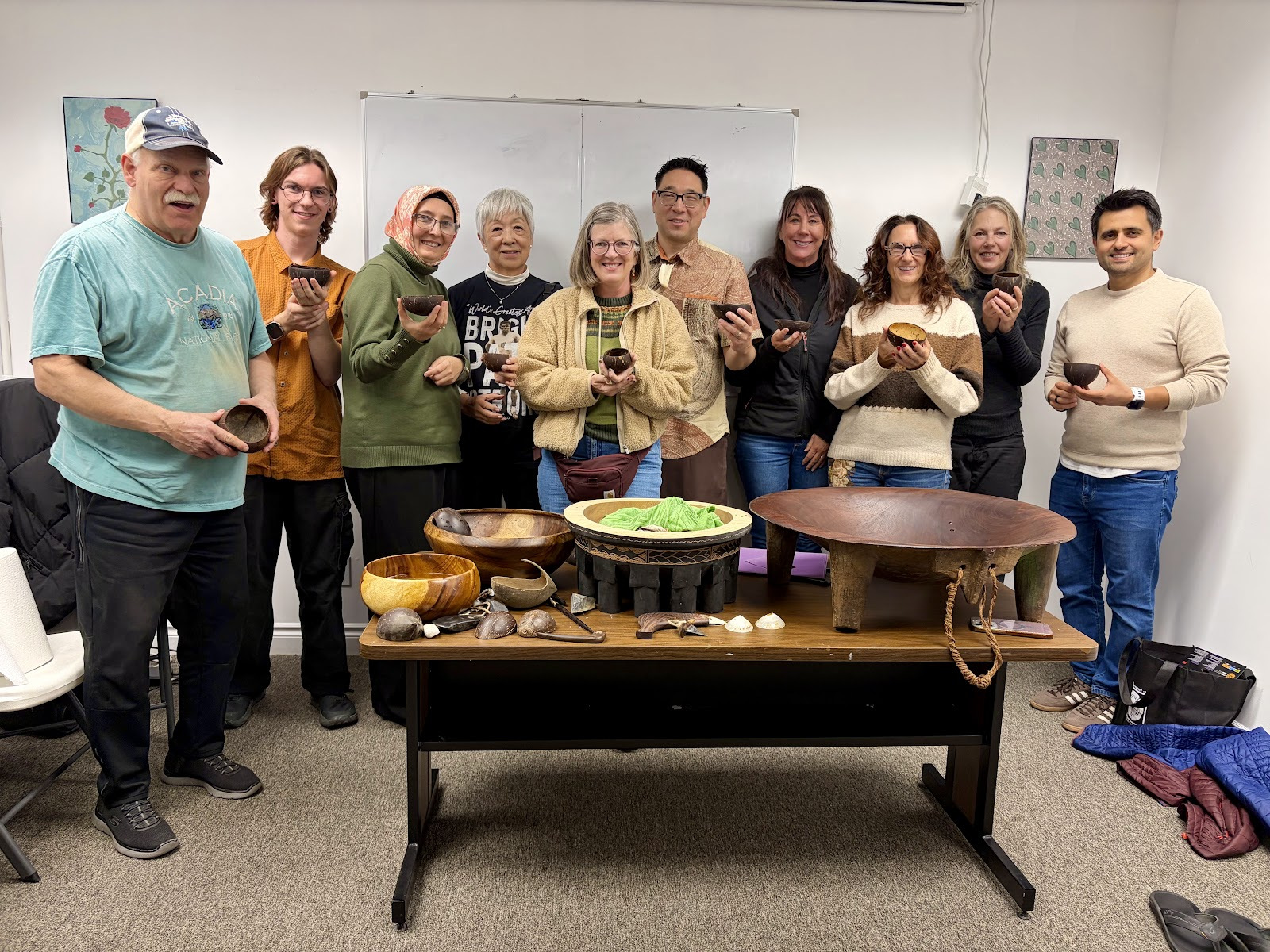
On November 14, Emerald Hills Institute, in partnership with the Utah Division of Arts and Museums, gave artist Kimo Watanabe a space to share his cultural tradition of ‘Awa and brought the community together to each craft their own ceremonial ‘Apu bowl. The craft and the ceremony set apart a sacred space of mindfulness and connection.
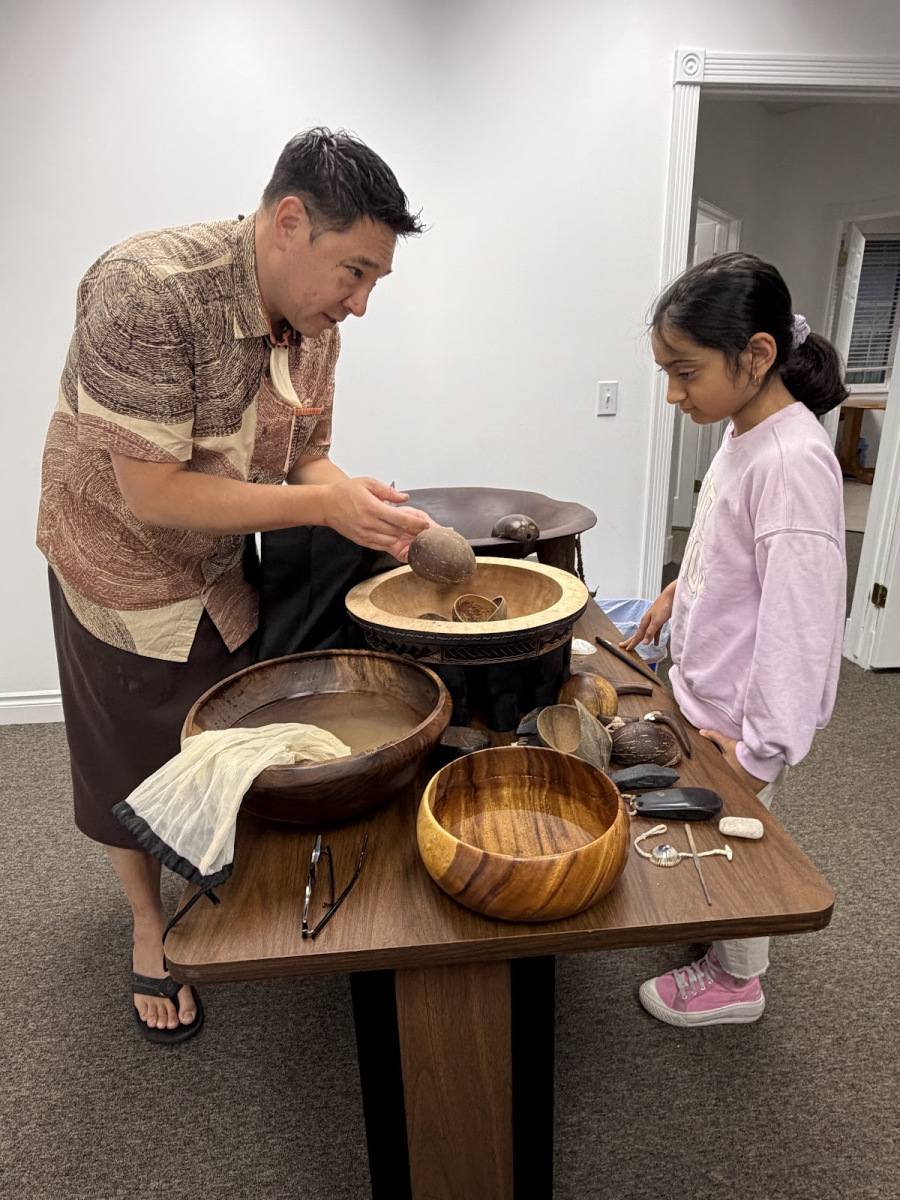
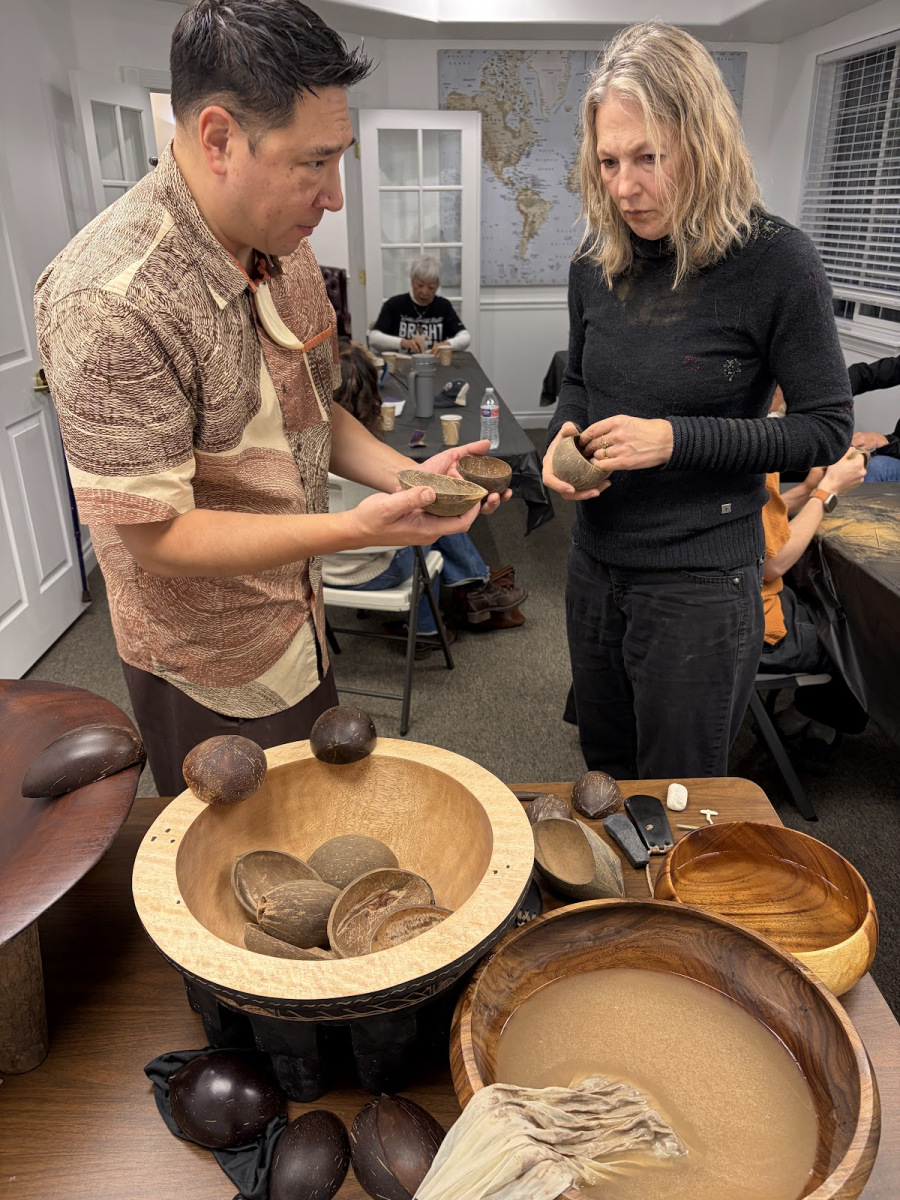
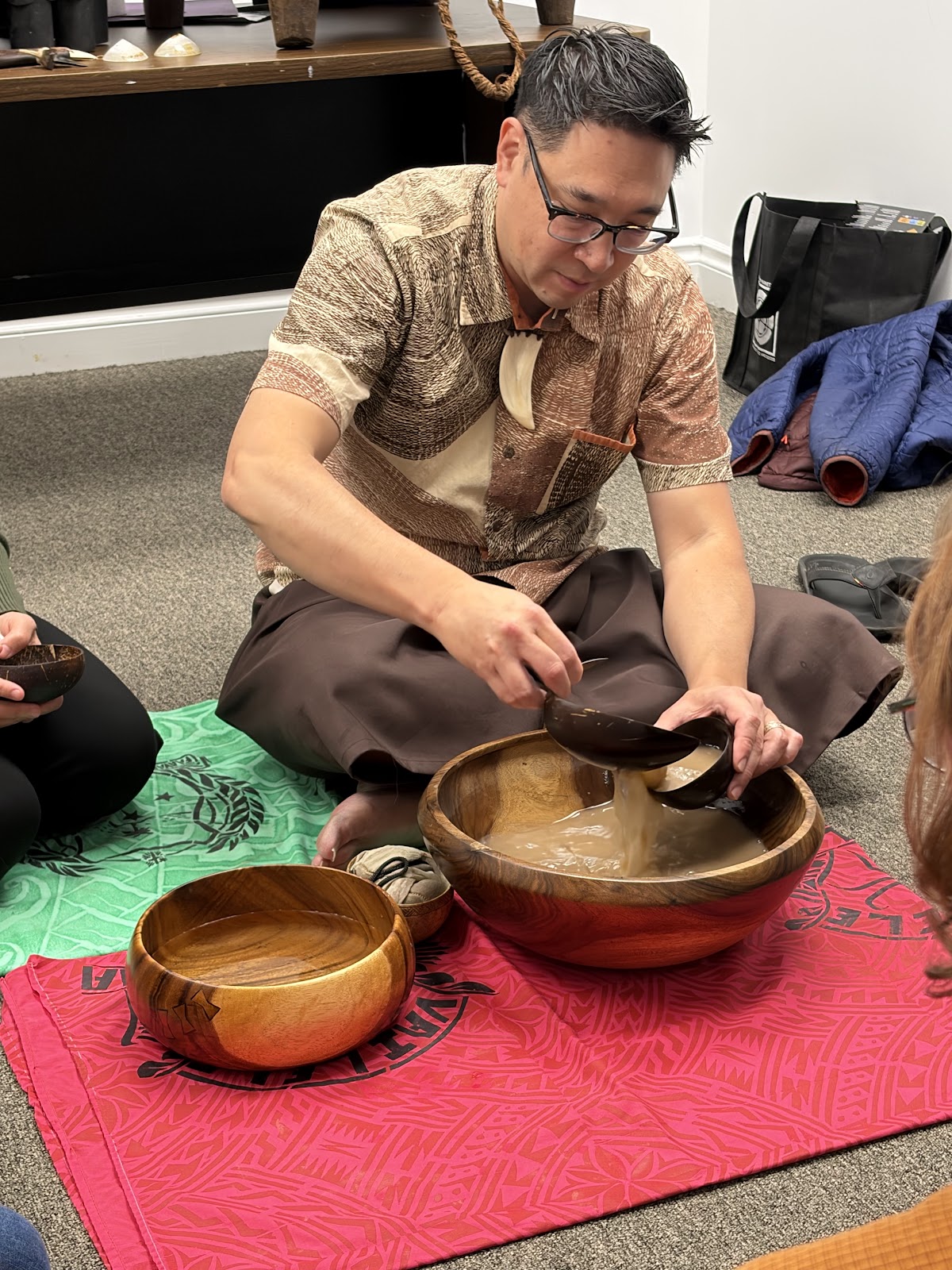
The evening began with Kimo Watanabe sharing the history of ‘Awa protocols that are shared throughout Oceanic cultures. To hold the Kava (‘Awa) root extract that would be used in the ceremony, Watanabe brought four variants of the Tanoa mixing bowl, including two of his Hawaiian culture, one of Samoan culture, and an antique of unknown origin that he had repaired. Watanabe shared his breadth of knowledge of both his native Hawaiian heritage, as well as that of numerous cultures in Oceania that have this shared, meaningful tradition.
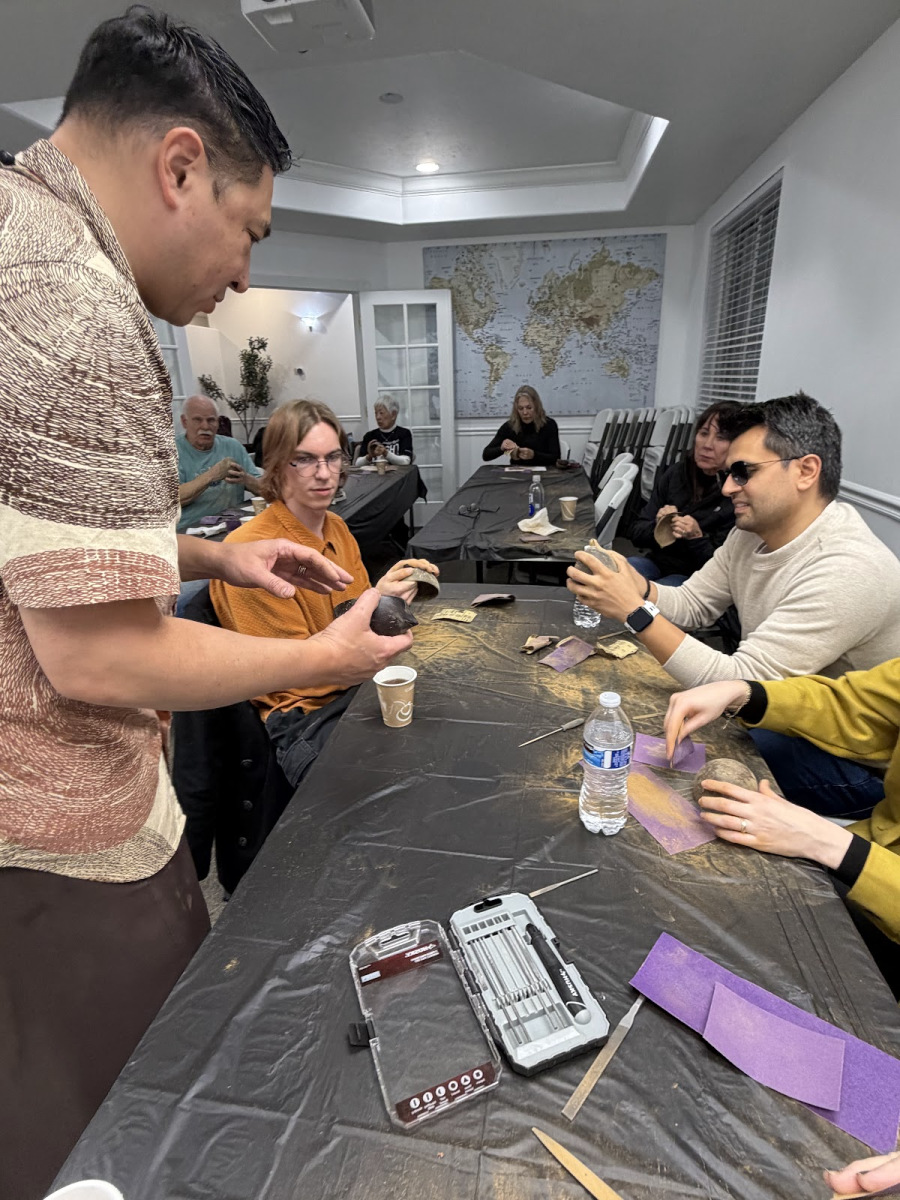
Following the history lesson, Watanabe showed what tools would have been used traditionally to craft the ceremonial ‘Apu bowls (pictured). The history involved with these tools is just as fascinating and nuanced as that of the ceremony; for example, some of the tools were made from stone native to Hawaii, but were found on islands elsewhere, which showed us a glimpse of the archeological history and trade routes in the area.
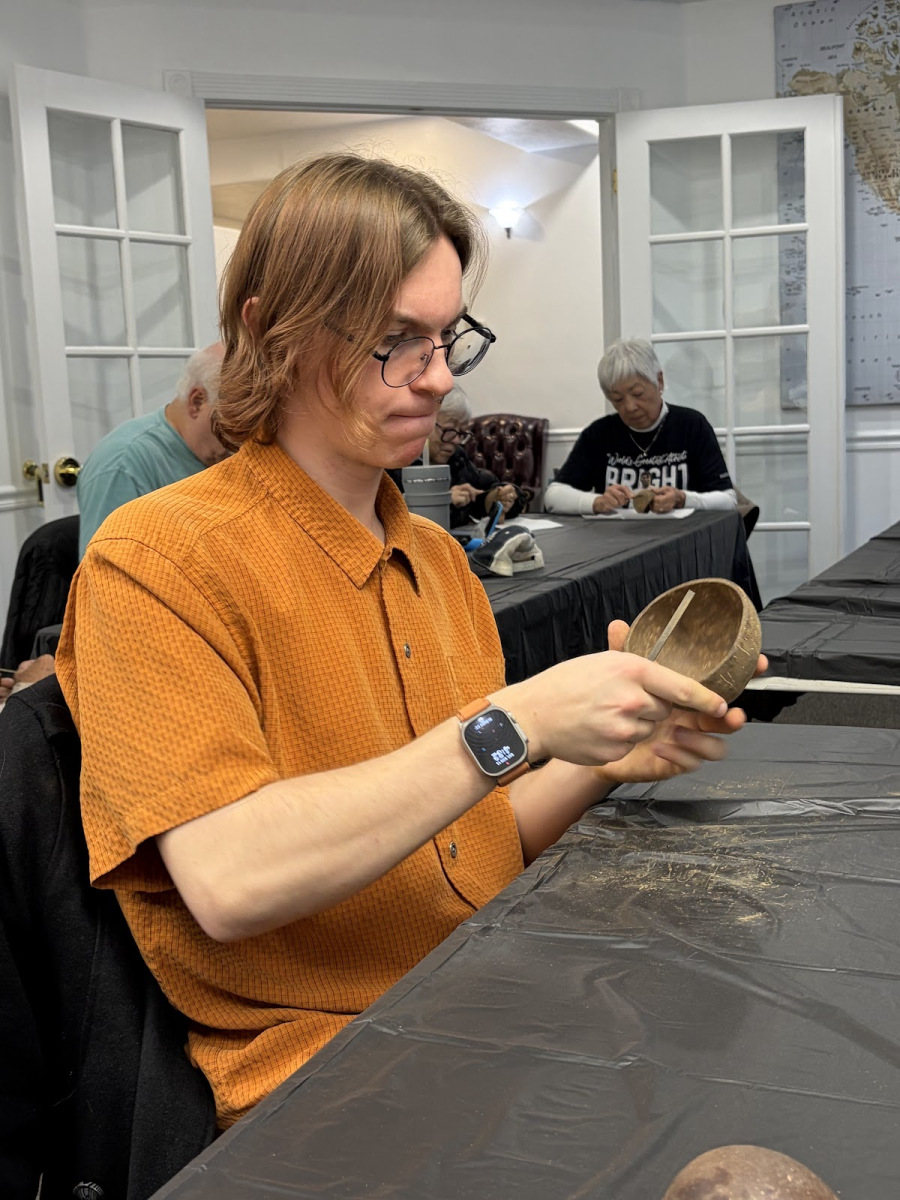
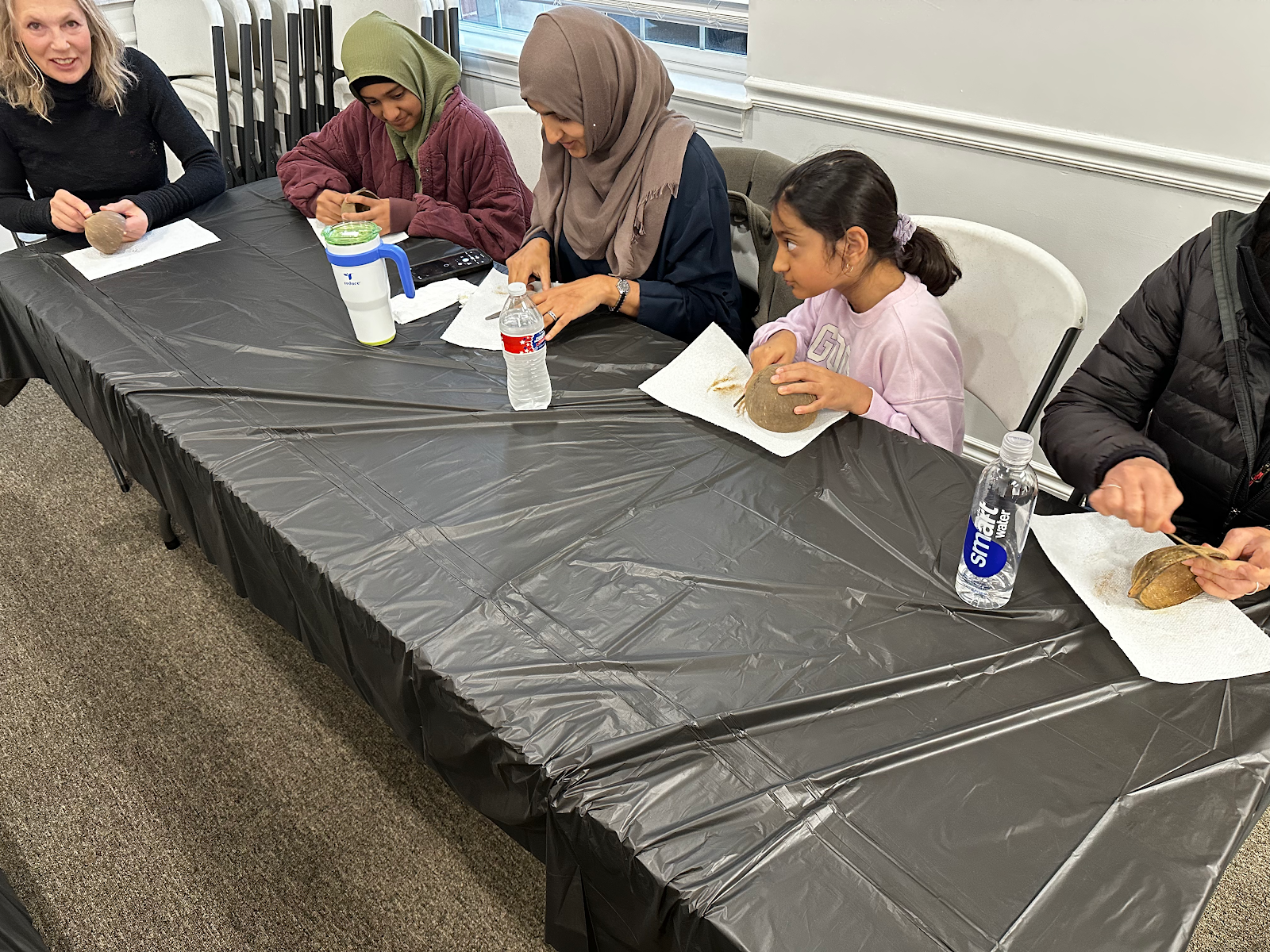
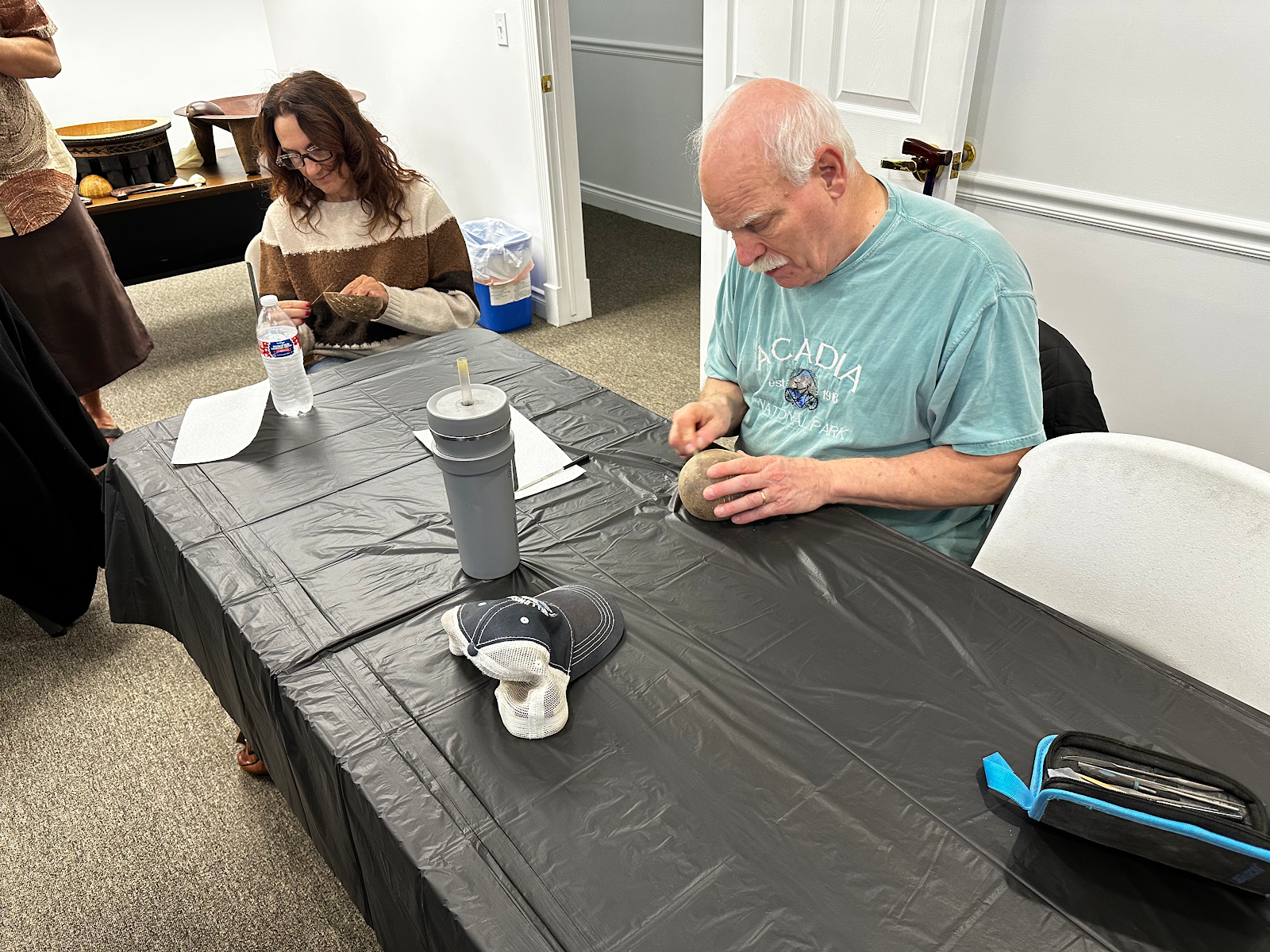
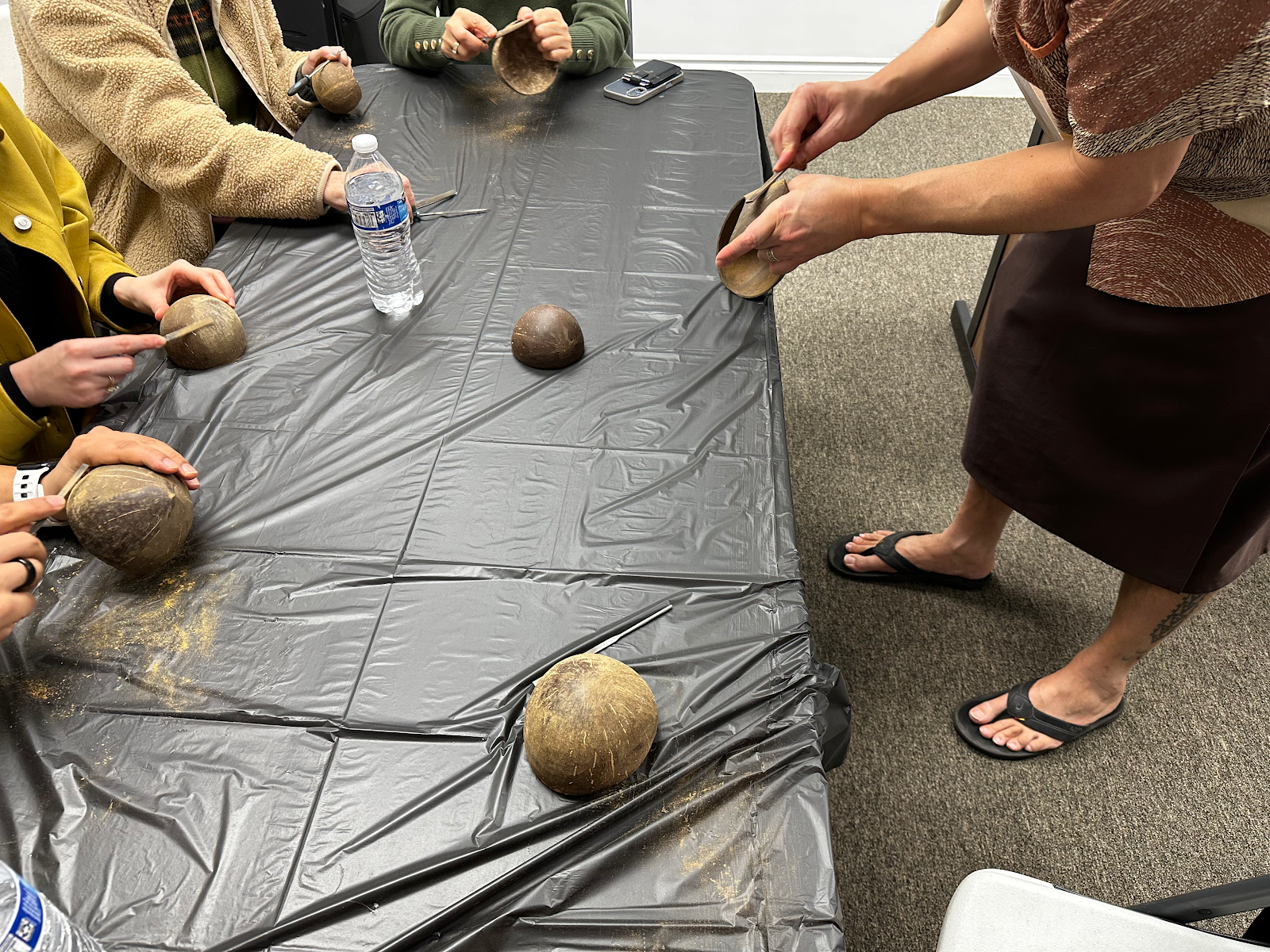
However, for the crafting of the ‘Apu, more modern tools were used: sandpaper and metal files. The crafting process involved all who were gathered for the event to make their own ‘Apu and left time for meaningful conversation and connection between attendees as they all worked on their own unique bowl.
The evening concluded with all in attendance gathering around Watanabe and his Tanoa of ‘Awa to each drink the kava root extract and say something for the group. With each dished-out bowl, people shared something meaningful to them. Things they were thankful for. Something they noticed while making their ‘Apu. Something important going on in their lives.
This ceremony helped to create a sacred space where everyone was able to reflect on their own culture, beliefs, and lives.
Emerald Hills Institute extends its heartfelt gratitude to artist Kimo Watanabe, the Utah Division of Arts and Museums, our organizers, and everyone who joined in sharing something meaningful.
When we learn more about different backgrounds, cultures, and faiths, and cooperate on meaningful projects, we build bridges and strengthen community.